SEO in Georgia: Google, Yandex and Google Maps for Your Website
How to get a website found in Georgia: which search engines matter, what to fix on the site itself, how to appear on Google Maps without an office, and how long it takes.
 Artem Grigorievykh · 10 min read

SEO in Georgia is mostly about Google, which handles the vast majority of searches in the country. Yandex is worth keeping in mind if your customers speak Russian, and for local businesses Google Maps matters just as much as regular search. What works is a combination of three things: a technically sound site in the right languages, a maps profile with reviews, and useful content that answers customers' questions.
We are Grig Studio. We do website development in Batumi and across Georgia and build SEO into every site from day one. Here is what actually moves rankings, what you can do yourself and why an honest timeline is measured in months.
Which search engines people use in Georgia
According to StatCounter for September 2026, more than 90% of search engine referrals in Georgia come from Google. Yandex accounts for roughly 5–6%, and everything else combined for under two percent. The exact numbers shift month to month, but the picture has been the same for years: Google comes first.
People search in Georgian, English and Russian, on phones and desktops. If your site ranks well on Google, you reach almost everyone: locals, tourists and expats. That is why we make technical decisions with Google's requirements first.
Yandex
Some Russian-speaking users rely on Yandex, including people who have recently moved or are here on holiday. You usually do not need separate "Yandex SEO": speed, clear structure and good content work there too. It is still worth adding the site to Yandex Webmaster to see how it reads your pages.
Technical SEO: the foundation
Technical work is invisible to customers, but without it content and links do not pay off. It is far cheaper to build it in during development than to fix it later.
Page speed
Google looks at how quickly a page loads and how usable it is. Heavy photos, full-screen video and a dozen third-party scripts slow a site down, especially on mobile data. Compress images, lazy-load them and remove anything that does not help the customer. Google PageSpeed Insights is a free way to check.
Mobile first
Google evaluates a site primarily by its mobile version. In Batumi and Tbilisi most customers search on their phones, often while out and about. Price, booking button and messenger links belong on the first screen, and text should be readable without zooming.

Language versions and hreflang
This is where Georgian websites most often go wrong. Each language should be a separate version of the page with its own address, for example /ka/, /en/ and /ru/, plus its own title and description. The versions are linked with hreflang tags, which tell search engines which page to show someone searching in Georgian and which to show someone searching in English. Translation widgets layered over a page are largely invisible to search engines. More in our article on multilingual websites in Georgia.

Structured data
Structured data (schema.org) tells search engines what a page is about: a business, a service, a product with a price, an article. For a local business, organisation markup with name, phone and service area matters most; for a store, product markup. It does not guarantee rich results, but it helps search engines understand the site correctly.
Sitemap and indexing
A sitemap.xml lists every page in every language, and robots.txt tells search engines what to skip: the admin panel, cart and utility pages. After launch, add the site to Google Search Console and Yandex Webmaster to see which pages are indexed, which queries bring people in and whether there are errors.
Local SEO and Google Maps
When someone searches for "plumber Batumi" or "massage near me", Google often shows a map with a few businesses before the regular results. For a local business, getting into that map block can matter more than ranking first among websites.
A Business Profile without an office
Many businesses in Georgia have no storefront: mobile technicians, delivery, remote services. Google Business Profile supports them as service-area businesses. Under Google's rules, if you do not serve customers at your address, you hide it and list the cities or areas you cover instead. You cannot set a radius, only named areas; you can add up to 20, and they should stay within about two hours' drive of your base. Google will ask you to verify the profile and will offer the verification method itself.
Reviews
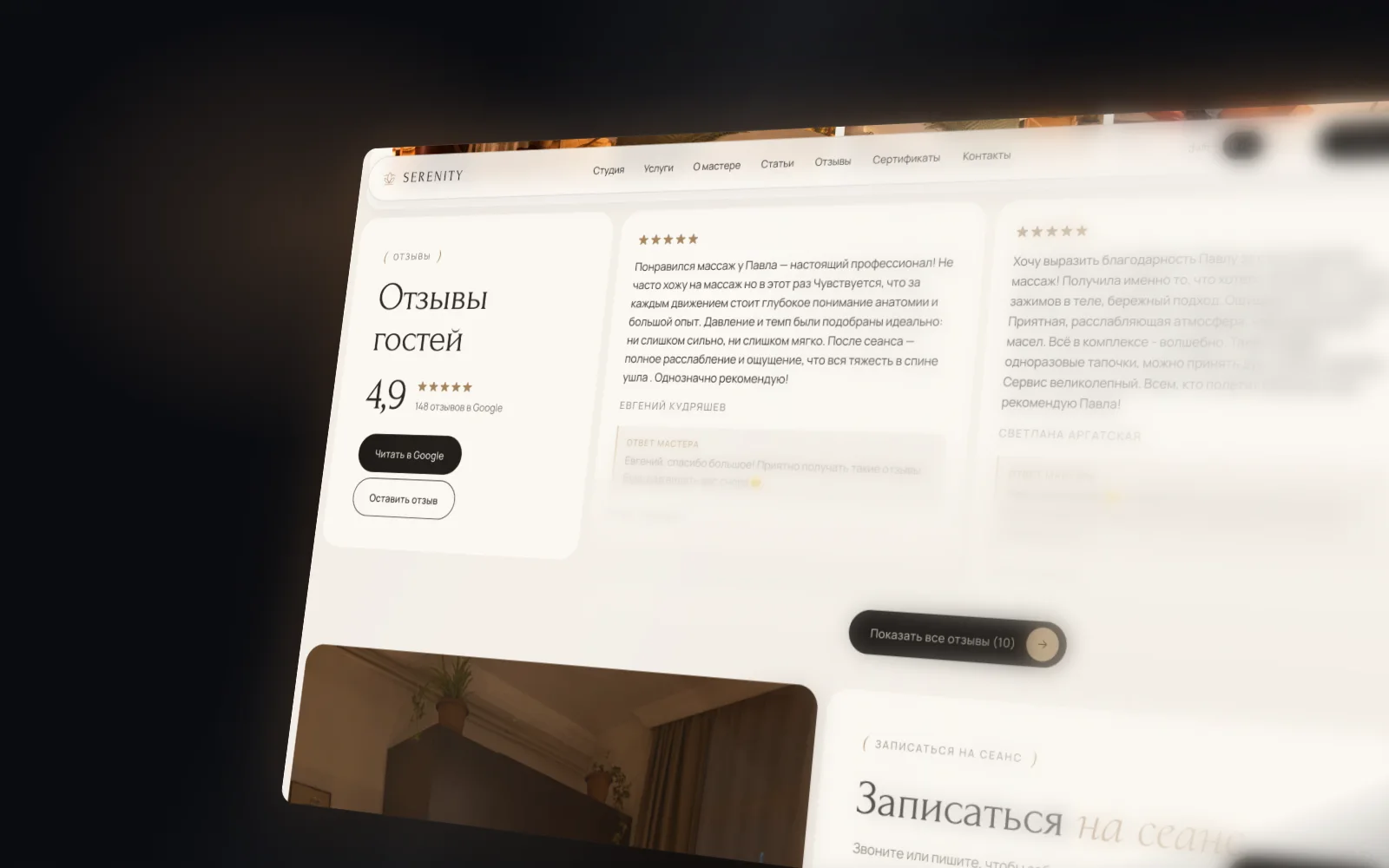
Reviews affect both map rankings and the customer's decision. Ask for a review right after the service, share a direct link and reply to every review, including critical ones. It also helps to show reviews on your site, so visitors see them even if they did not come from Maps.
Consistent details everywhere
Your name, phone number, hours and area should match on the website, Google Maps, messengers and directories. If one place has an old number and another a new one, search engines find it harder to tell it is the same business.
Content and blogging
Your pages answer customers' questions, and search engines favour whoever answers best.
Find out what customers actually search for
Before writing anything, check the words people use to look for your service. Start with Google's search suggestions: type the service and the city and see what comes up. Google Ads Keyword Planner gives a sense of demand, and for Russian-language queries you can also look at Yandex Wordstat. After launch, Google Search Console is the best source: it shows which queries the site already appears for and what people click. A common finding is that customers do not search for "massage salon" but for "back massage Batumi" or "massage near me". Build pages and titles around those queries, not around what you call the service internally.
One page per service
A single "Services" list rarely ranks for a specific query. A dedicated page for each service with a price, description, FAQs and photos performs much better. The Serenity site, for example, has 75 pages in three languages, and services have their own dedicated pages.
Articles
Articles reach people who are still deciding: how to choose, what it costs, what to bring. Write about what customers actually ask you and link from each article to the relevant service. Consistency beats volume: two useful posts a month are better than ten in one week followed by silence.
Search titles and descriptions
Every page needs its own search title and description with the main keyword and a clear benefit. This is what people see in the results before they decide to click.

Backlinks
Links from other websites still help search engines judge whether you are trusted. What works are links that appear naturally:
- partners and suppliers who mention you;
- local directories, city guides and travel sites;
- coverage in media and blogs about Georgia;
- profiles on social networks and platforms your customers use.
Buying hundreds of links from link marketplaces is risky: search engines can spot them and may push the site down. A few genuine links beat many random ones.
How long SEO in Georgia takes
The honest answer is months. A new site needs time to be found, indexed and trusted. For local queries with modest competition, early movement usually shows within a few months, and steady growth takes six months or more. Competitive niches take longer.
Nobody can guarantee the top spot: search engines decide for themselves and keep changing their algorithms. If someone promises "top of Google in a month", ask how. What does speed things up:
- launching before the season, not in the middle of it;
- having every language version ready from the start;
- setting up your Google Maps profile and collecting reviews from day one;
- publishing articles and updating service pages regularly.
What we build into every site from day one
The SEO foundation is part of every site we launch, not an add-on sold later.
- Speed. Compressed images, lean code and fast loading on mobile.
- Language versions. Separate addresses for Georgian, English and Russian, linked with hreflang.
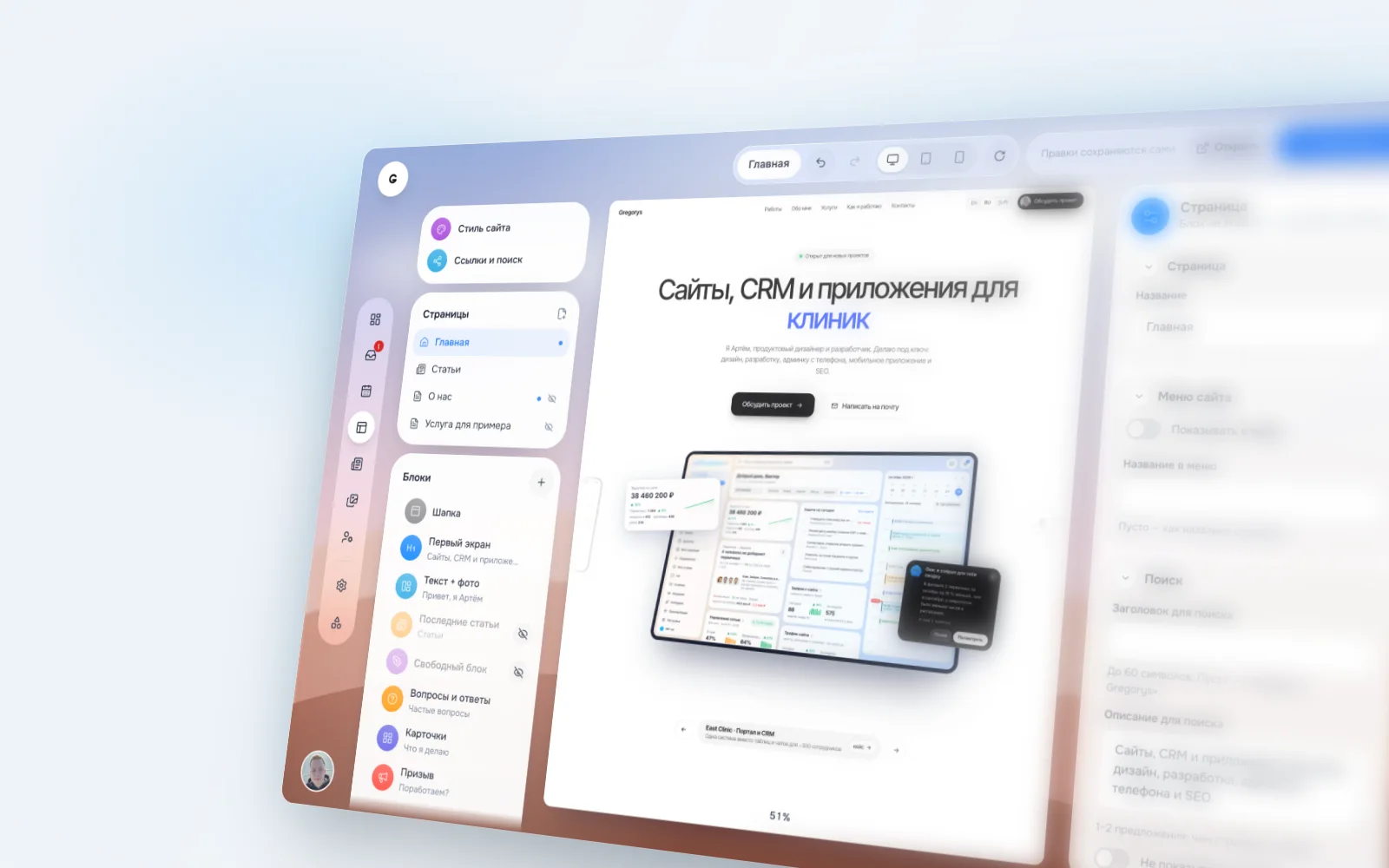
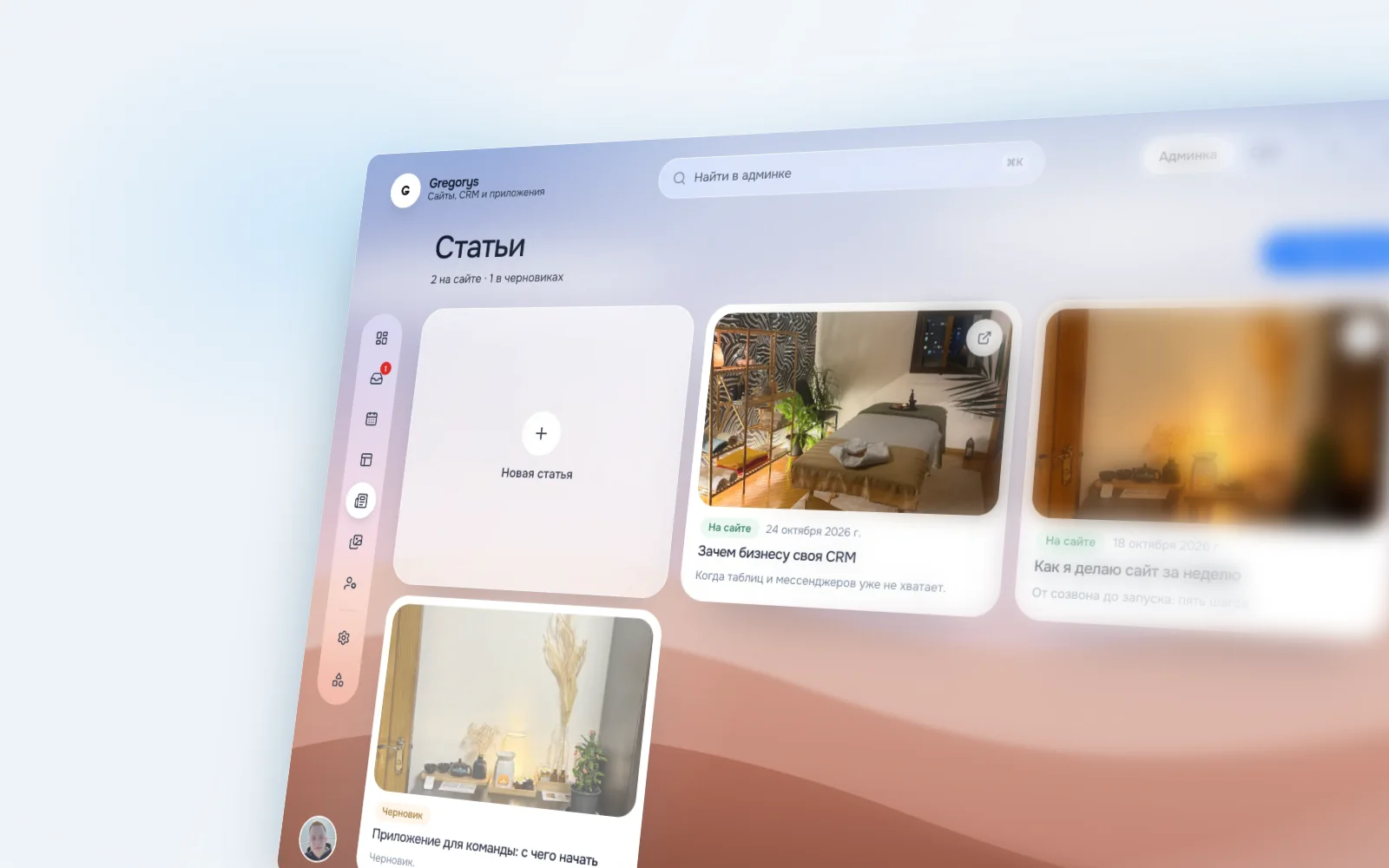
- Titles and descriptions. Unique for each page and language, with length hints right in the admin panel.
- Structured data and sitemap. Business, service, product and article markup; sitemap.xml and robots.txt.
- A blog. Articles in the admin panel with SEO hints and a search preview.
- Google Maps consistency. The same name, phone and service areas on the site and in your business profile.
See it in practice in the Serenity case study and on our admin panel page. All our services are on the services page, and our guide to website development in Batumi covers how to choose a contractor.
FAQ
Do I need separate SEO for Yandex?
Usually not. Google is the main search engine in Georgia, and what works for Google generally works for Yandex too. Connecting the site to Yandex Webmaster and watching for errors is enough.
Can I appear on Google Maps without an office?
Yes. Google Business Profile supports service-area businesses: your address stays hidden and you list the cities or areas you serve. You will need to verify the profile using the method Google offers.
Which language should I optimise for?
The ones your customers search in. Most businesses in Batumi and Tbilisi need Georgian, English and Russian. Each language should be a separate set of pages, not an automatic translation.
How much does SEO cost?
It depends on what is already in place and how competitive your niche is. If the foundation is built in during development, ongoing costs are mostly content. For the cost of the site itself, see website cost in Georgia.
Can a Wix or Tilda site rank?
It can, but you often hit limits with language versions, speed, structured data and URLs. We compare the options in Wix vs a custom website.
When will the first customers come from search?
Google Maps sometimes brings enquiries sooner than organic search, especially once you have reviews. Organic results usually take a few months. Nobody can promise exact dates, and that is normal.
Let's talk about your SEO
Tell us what your business does and where your customers look for you. We will look at your site or your competitors, reply within one business day and suggest where to start.