How much does a website cost in Georgia in 2026?
Prices for a business card site, landing page, service website, online store, booking site and portal in Tbilisi and Batumi, plus the running costs nobody mentions upfront.
 Artem Grigorievykh · 11 min read
What is the website cost in Georgia in 2026? In short: a simple template site usually stays under $1,000, a company website with a custom design comes to $1,000–5,000, and an online store, booking system or customer account starts at around $3,000. Below we go through prices by type of site, what pushes the cost up or down, what you keep paying after launch and how to work out what you actually need.
Our prices are below the market. We price by the actual scope of work, so a simple website starts from $100–200 with us, and a small online store with an admin panel, order management and customer accounts starts from $400. More at the end of the article.
We do website development in Batumi and across Georgia in Georgian, English and Russian, so these questions come up every week. This guide will help you talk to any agency or freelancer already knowing what you are paying for.
Website cost in Georgia: market benchmarks
We looked at public data from agency directories (Clutch, DesignRush, GoodFirms, workspace.ru) for Tbilisi and Batumi. Treat it as a guide, not a price list: two studios can quote the same project very differently because they understood it differently.
- Template or site-builder website: up to $1,000.
- Service website with a custom design, 10–15 pages: $1,000–5,000.
- Online store, booking, customer account: $3,000–10,000.
- Portals, CRMs and apps: from $10,000–25,000 and up.
According to the same directories, an hour of agency work in Georgia usually costs $20–50, more at larger firms. If a studio bills by the hour, the total depends on how many hours it budgeted for each part. So it pays to understand what the number is made of.
Prices by type of website
Business card site
One or a few pages: who you are, what you do, how to reach you. Good for a solo professional or a small company starting out. On a template or builder this is the cheapest category, up to $1,000. With a custom design and two or three languages it moves towards the lower end of a service website.
Landing page
One long page for a single service or ad campaign. Its cost depends less on page count and more on the thinking: copy, structure, block design, the request form and analytics. A template landing page sits in the first category; one with considered copy and a custom design is closer to the second.
Service website
The most common order: home page, service pages with prices, reviews, about, contacts, sometimes a blog. Usually $1,000–5,000. The price grows with the number of pages and languages, and with how easily you can change prices and copy yourself.
Online store
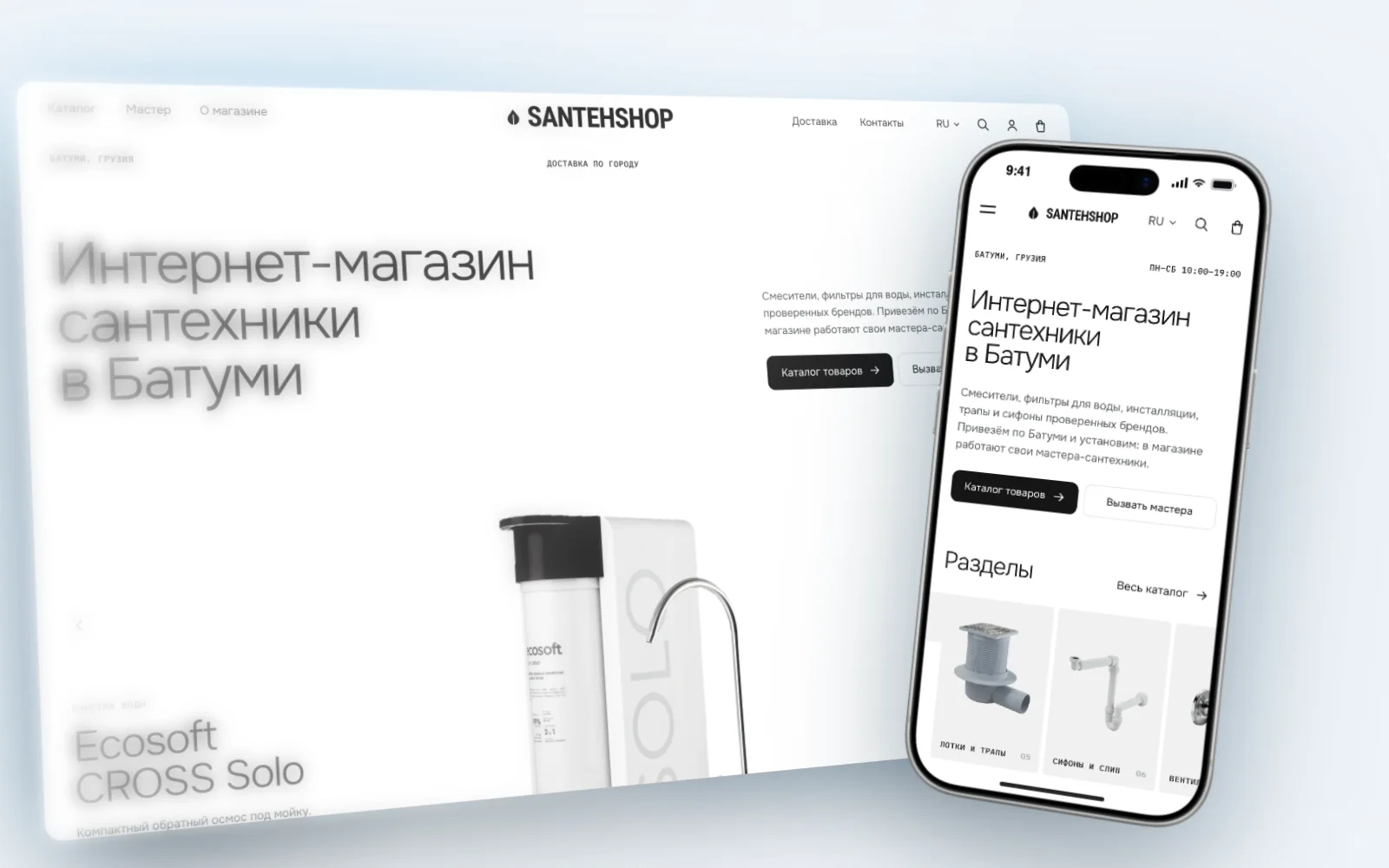
Catalogue, filters, product page, cart, delivery, payment and an admin for orders. Usually $3,000–10,000, more for a large catalogue with integrations. The key questions: how many products, where they come from (by hand, a spreadsheet, an accounting system), whether you need online payment and how delivery works. More in our guide to ecommerce websites in Georgia.
Booking website
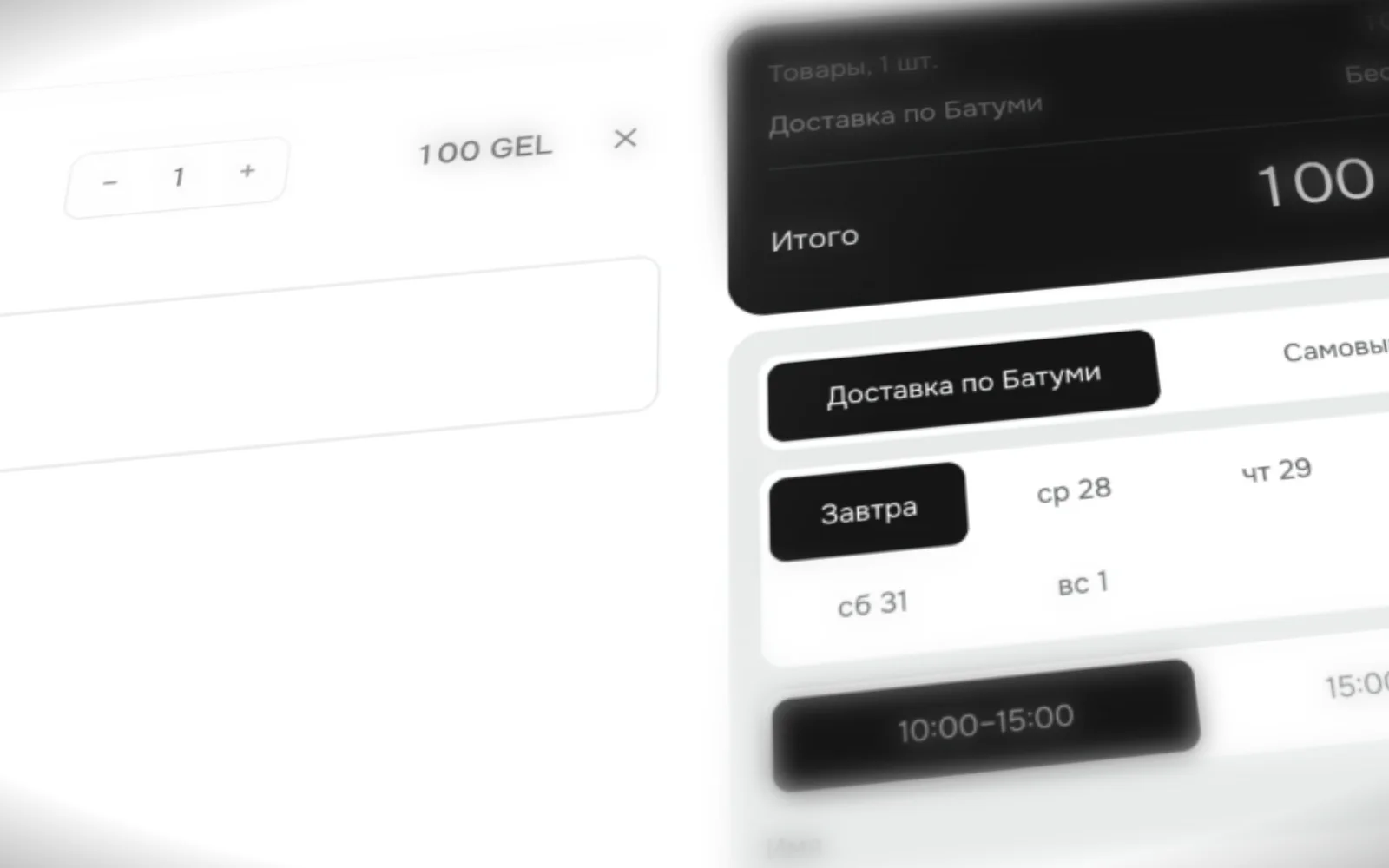
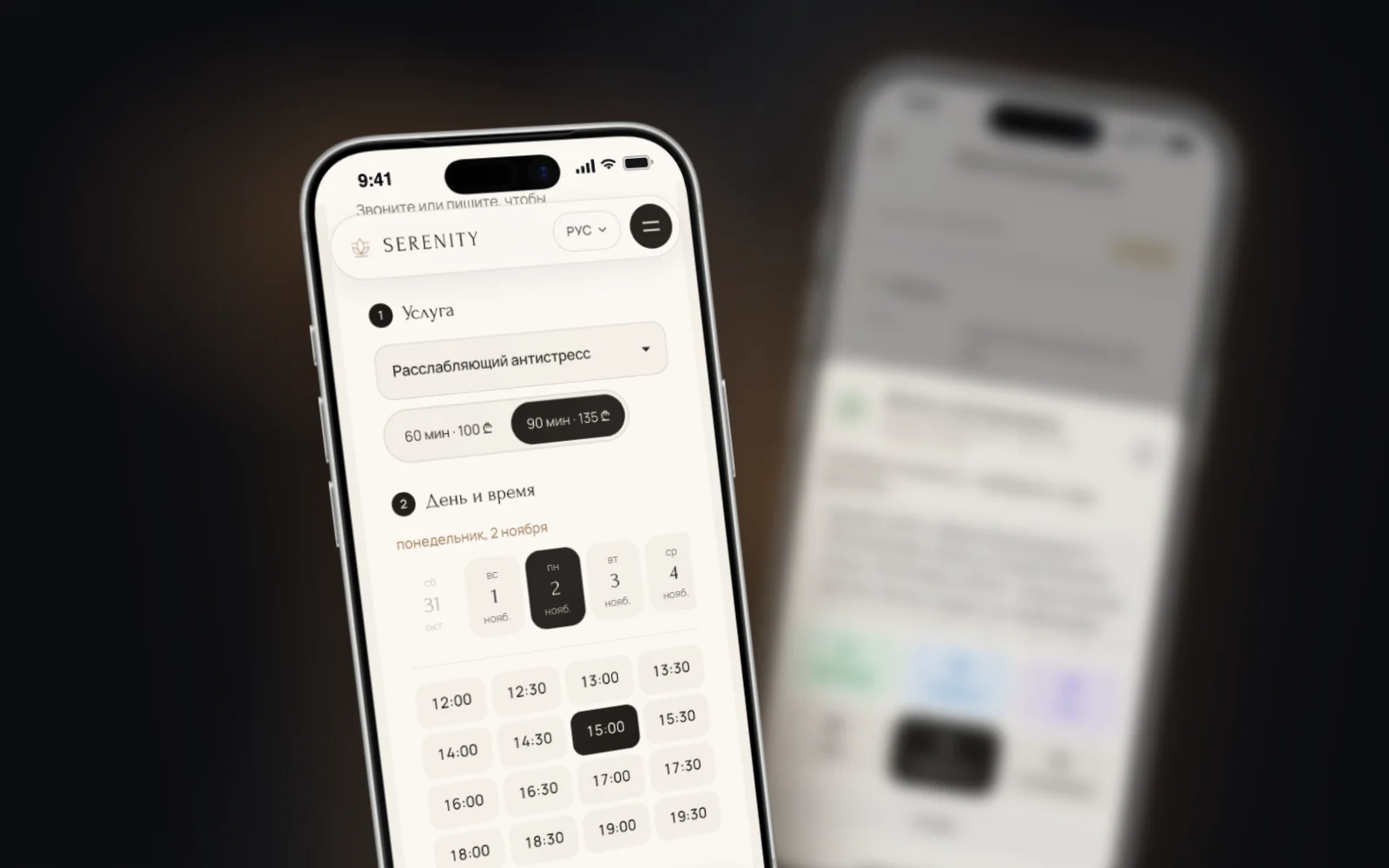
Salon, studio, clinic, solo specialist: the client picks a service, a day and a time and books on their own. This is a website plus a calendar, notifications and a client base. On the market it is usually $3,000–10,000. The alternative is a regular site plus a third-party booking service with a monthly fee. See our article on booking websites for salons.
Portals, CRMs and customer accounts
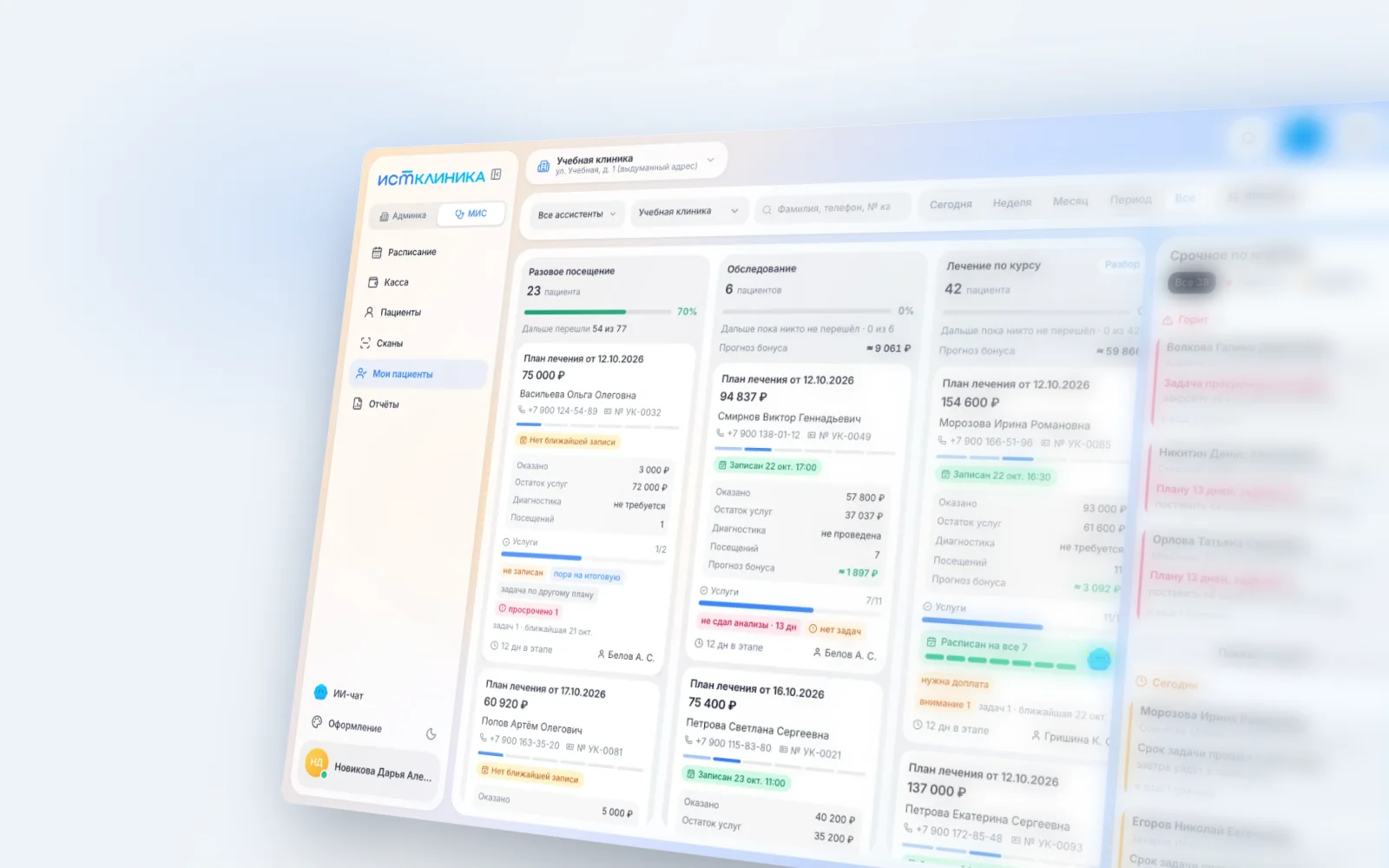
Systems for staff and clients: schedules, payments, tasks, reports, roles and permissions. This is months of work, and market prices start at $10,000–25,000. Such projects are almost always quoted in stages rather than as one figure.
What drives the price
Scope and structure
The number of pages and page types. Ten service pages built on one layout cost less than ten different pages. That is why a good studio agrees on the structure first and quotes second.
Custom design or template
A template is cheaper and faster. A custom design costs more, but the site is built around your customers and your photos rather than around what a theme allows, and it doesn’t look like hundreds of others.
Languages
In Georgia a website almost always needs two or three languages. Each one means not just translation but its own page addresses, search titles and links between versions. Planned from day one, the second and third languages cost far less than reworking a finished site. More in our guide to multilingual websites in Georgia.
The admin panel
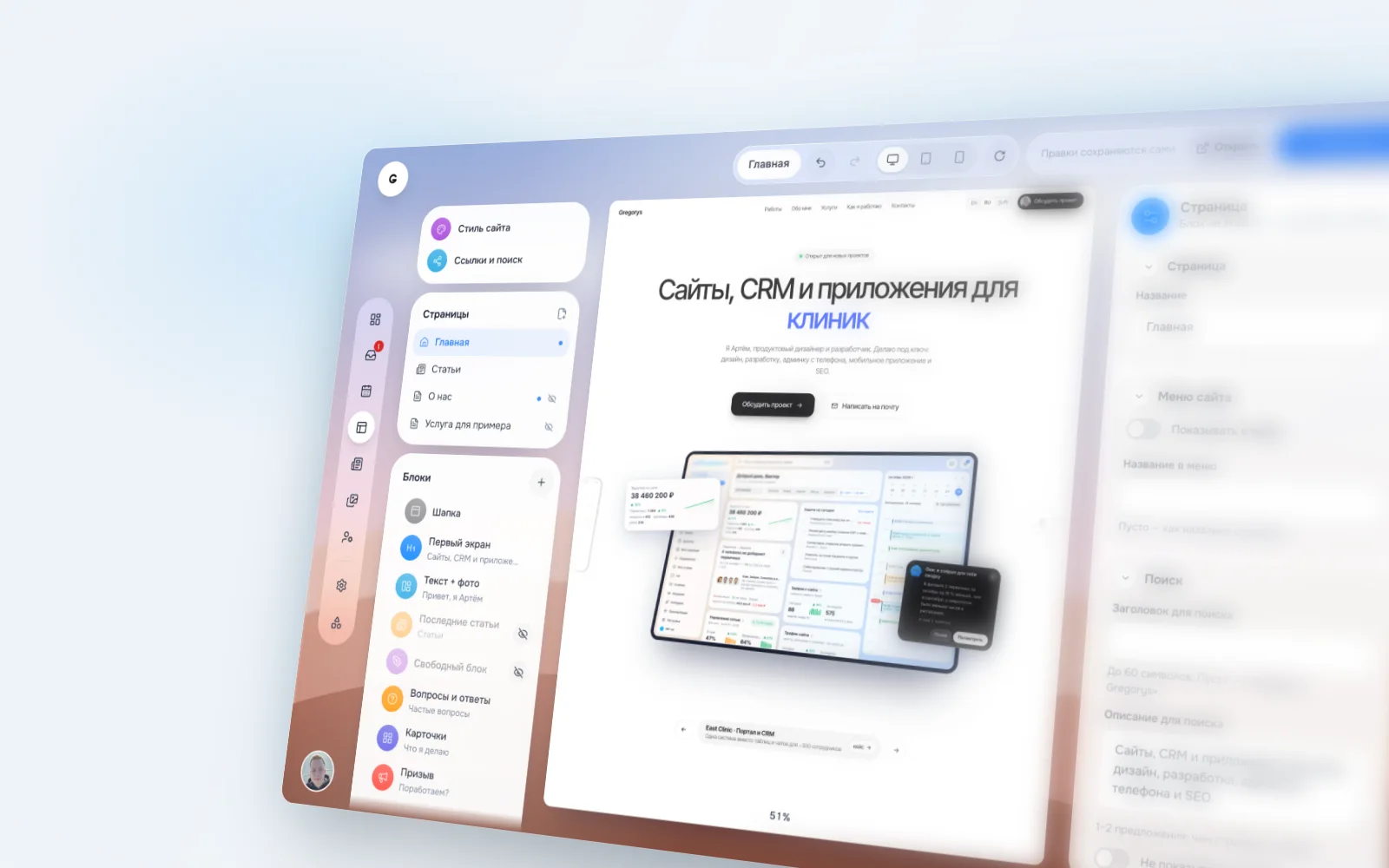
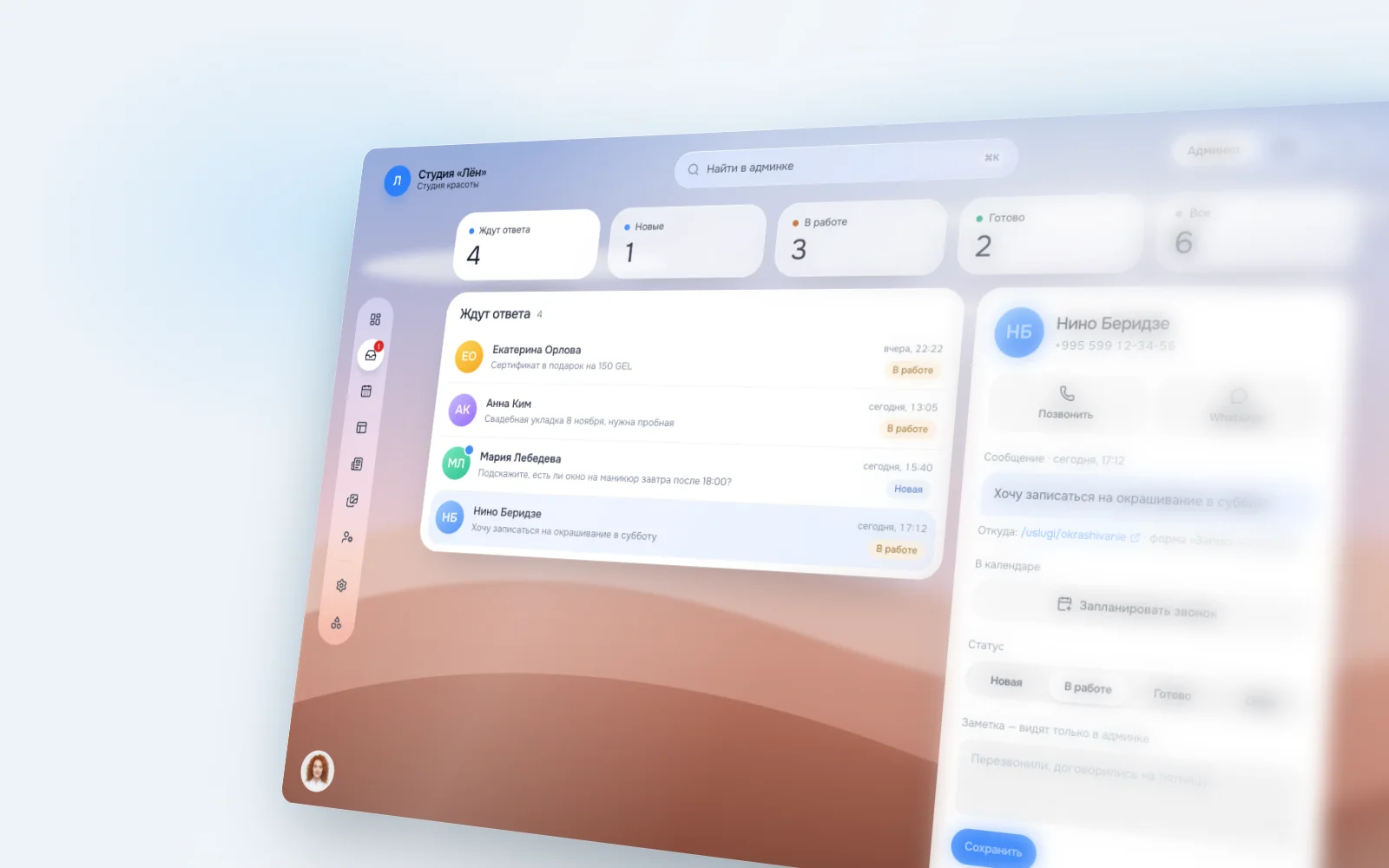
Can you change prices, photos and copy yourself, or does every edit go through a contractor? A convenient admin costs money to build but saves money every month after launch. See how we do it on the Your own admin page.

Features and integrations
Online booking, card payments, cart, customer account, notifications in Telegram and WhatsApp, a link to your accounting system. Each feature adds days of work and testing. Integrations with other systems cost the most: bank acquiring, warehouse, delivery services. We cover payments separately in online payments for websites in Georgia.
SEO from day one
Fast loading, proper headings, a sitemap, structured data, language versions. Built in during development, they are cheap. Fixing them on a finished site usually costs more.
Copy and photos
Who writes the copy, who translates it and where the photos come from. If you have it ready, the price is lower. If not, agree upfront on who does what, or you will end up with a finished site and nothing to put on it.
Hidden and monthly costs
You pay for development once, but the site lives for years. Here is what usually costs money after launch.
- Domain. Paid yearly. The price depends on the zone (.ge, .com and others), check with the registrar.
- Hosting or server. For a small site, usually from a few to a few dozen dollars a month. A store or a system with a database needs more.
- Site builder subscription. On Tilda, Wix and similar services you pay monthly or yearly, and the plan grows with the features you need.
- Booking, CRM and mailing services. Often billed separately and monthly, many priced by number of staff or features.
- Payment provider. The bank or provider takes a fee on each payment. Check the exact terms with your bank.
- Support. Updates, backups, small edits, new pages.
- Translations. New copy, articles and services need translating into every language on the site.
Small monthly amounts add up over a few years. Compare offers by the total for two or three years, not just the development price.
The sites we build have no subscription for a site builder or CRM: the website and the admin belong to you. Requests land in the admin and in Telegram, and clients and bookings live there too. Only the domain and hosting remain. We compare the options in detail in Wix vs custom website.
Freelancer, agency or site builder
Do it yourself on a builder
- Pros: fast, cheap to start, you can do it yourself.
- Cons: a monthly subscription, a template look, limits on languages, booking and SEO, and your own time spent on setup.
- Good for: testing an idea or getting started without a budget.
Freelancer
- Pros: usually cheaper than an agency, direct contact with the person doing the work.
- Cons: often covers just one part: design, front-end or setup. Copy, SEO, hosting and support have to be found elsewhere. If the person disappears, the site is left without an owner.
- Good for: a clear, small task where you cover the rest yourself.
Agency
- Pros: responsible for the whole result: structure, design, copy, development, SEO, launch and support.
- Cons: usually costs more than a freelancer at the start.
- Good for: when the site has to bring in leads and you want a turnkey website, not a set of parts.
How to read a quote
A good quote answers your questions before you ask them. Check that it includes:
- The list of pages and page types.
- Languages and who does the translation.
- Features as separate lines: booking, payment, cart, account, notifications.
- What SEO covers: headings, sitemap, speed, language versions.
- Who prepares copy and photos.
- Timeline by stage and what is needed from you at each one.
- Who owns the site, the code, the domain and the admin.
- What the site will cost per month after launch.
Red flags: one figure with no breakdown, no word about who owns the site, or “support is mandatory” with no explanation of what it covers.
Timelines
Market benchmarks:
- Template site: a few days.
- Service website: one to several weeks.
- Store, booking, CRM: a month or more.
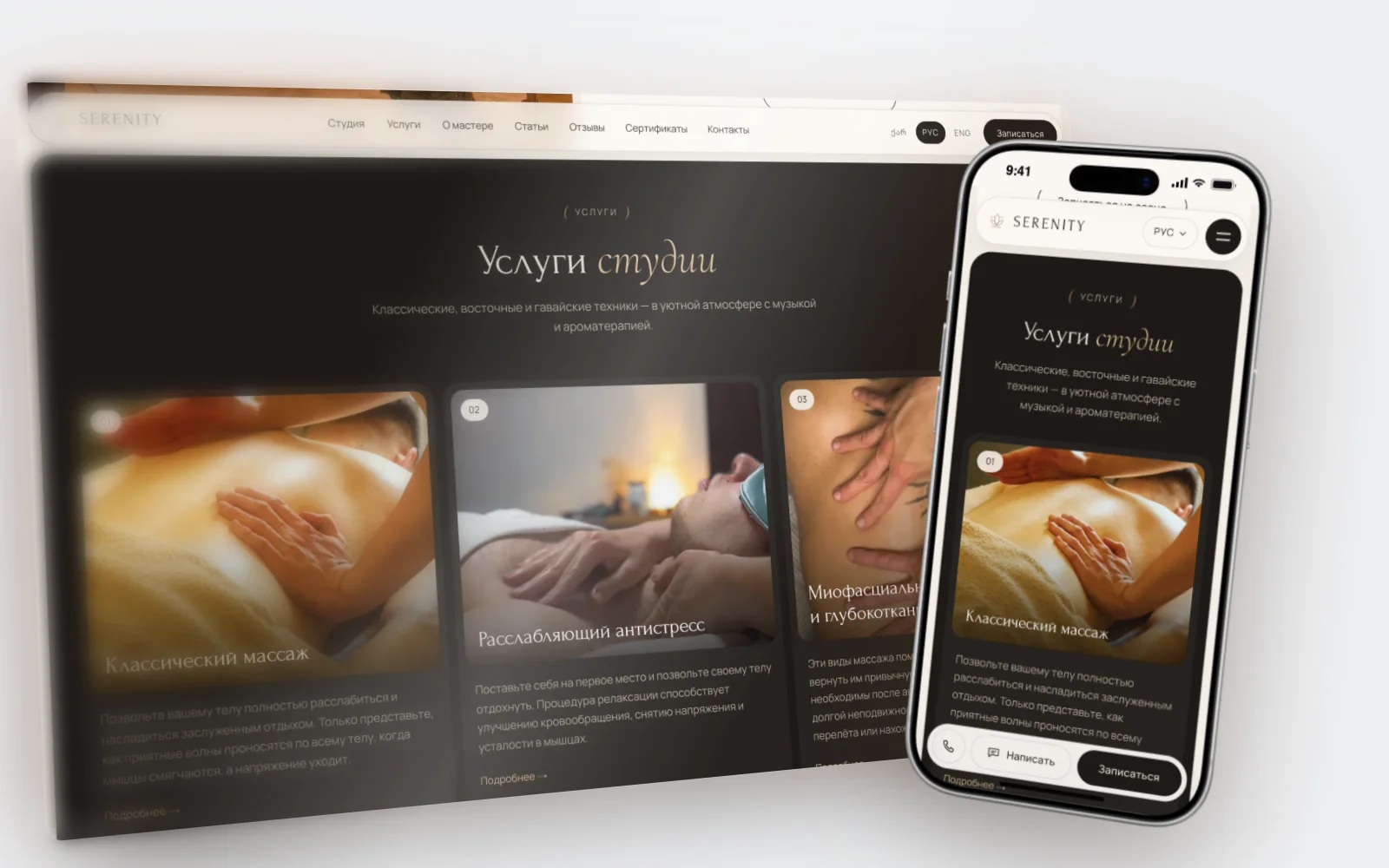
With us, design, copy, development and SEO usually take about a week; larger systems take longer, and we give the timeline upfront. It can be faster: we launched the website of Serenity, a massage studio in Batumi, with three languages, 75 pages, its own admin and online booking in a single day, because our admin core was already built.
A back-of-the-envelope example
Take a hypothetical nail studio in Batumi. It needs:
- a home page, 8 service pages with prices, reviews and contacts;
- three languages: Georgian, English, Russian;
- online booking with a choice of specialist and time;
- requests sent to Telegram;
- the ability to change prices and photos on its own.
By market benchmarks this is a booking website, so the $3,000–10,000 category. Where it lands within that range depends on the details: are copy and photos ready, is there a blog, is payment taken at booking.
Now the second option: a site builder plus a booking service. Say together they cost $50 a month (an illustrative figure; every service has its own plans). Over three years that is $1,800 in subscriptions alone, and the site still isn’t yours. Plug in the real plans you are considering and compare with a one-off build.
FAQ
Can I start cheaper and improve the site later?
Yes, if you agree upfront on what comes at launch and what comes later. For example, launch in one language with requests going to Telegram, then add online payments and a second language a couple of months later. The key is a foundation that can grow without a rebuild.
Why do agencies quote such different prices?
Because they understood the task differently and count differently: one included copy, SEO and an admin, another didn’t. Ask for an itemised quote and compare the same scope.
Which currency do I pay in?
In Georgia studios usually quote in US dollars or lari. Paying in stages is convenient: an advance, a payment after the design is approved and the rest after launch.
How much does website support cost?
It depends on what it includes: updates, backups, small edits, new pages. With a convenient admin you make most edits yourself, so support is rarely needed.
Does it matter if the agency is in Tbilisi and my business is in Batumi?
Hardly: the work happens remotely through calls, messages and shared documents. What matters is whether the agency understands your market, languages and clients. We work across Georgia, including Batumi, and remotely.
What a website costs with us
Our prices are noticeably lower than those of most studios in the overview above. We do not work from a price list that starts at $3,000: we look at the scope and charge only for what your project needs. Our website and admin core is also already built, so we do not rebuild it for every client.
- Simple website: from $100–200, depending on the project.
- Small online store: from $400. That includes the catalog, cart, an admin panel with order management and customer accounts.
- Add-on features are priced on top: online card payments, booking, an extra language, filling the catalog, integrations.
We give the exact price after a short conversation about the project: what needs to be done, in which languages, which features you need at launch and which can wait. The quote is itemised and the timeline is set upfront. We reply within a working day on Telegram, WhatsApp or through the form on the site. See what’s included on the Services page.