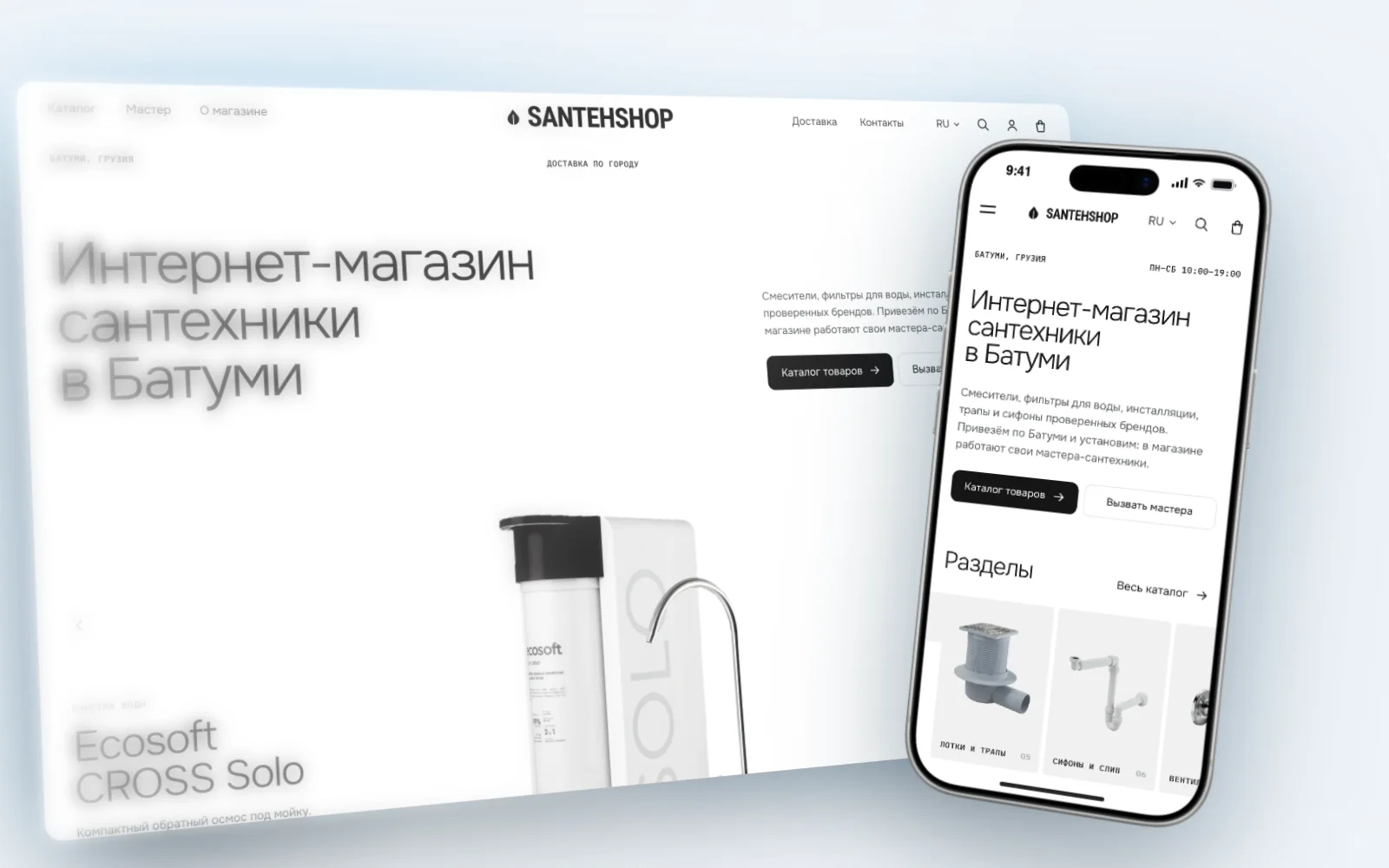
Online store in Georgia: catalog, delivery and payments
When a business needs its own online store and when Instagram is enough. Catalog and filters, a cart with delivery days, payments, admin and SEO, shown on Santehshop.
 Artem Grigorievykh · 10 min read

An ecommerce website in Georgia pays off when you have many products, customers keep asking the same questions and orders get lost in chats. A good store means a catalog with filters, a clear product page, a cart where customers pick a delivery day, payment by card or on delivery, and an admin panel that shows every order. Below we go through each part and show how it works in Santehshop, the plumbing store we built for Batumi.
We do website development in Batumi and across Georgia, including turnkey online stores: from the catalog structure to the admin panel the store runs on after launch.
Your own store, Instagram or a marketplace
Not every business needs its own store right away. An honest comparison saves you from spending too early.
When Instagram or a marketplace is enough
- You have a few products, and they fit in your feed and pinned stories.
- Customers come from social media and message you directly.
- You are still testing demand.
- Nobody on your team will keep stock and prices on a website up to date.
A marketplace brings buyers, but the platform sets the rules, the fees and the storefront, and the customer base stays with it.
When you need your own ecommerce website
- You have dozens or hundreds of products with categories, brands and specs.
- Customers keep asking the same things: is it in stock, how much is delivery, when will it arrive.
- Orders get lost in chats, and someone copies them into a spreadsheet by hand.
- You want to be found on Google for searches like "buy faucet Batumi", not only by your name.
- You want to know your customers and their order history.
Your own store does not replace social media. A link from Instagram to a specific product with a price and an "Add to cart" button sells better than "message us for details".
Catalog and filters
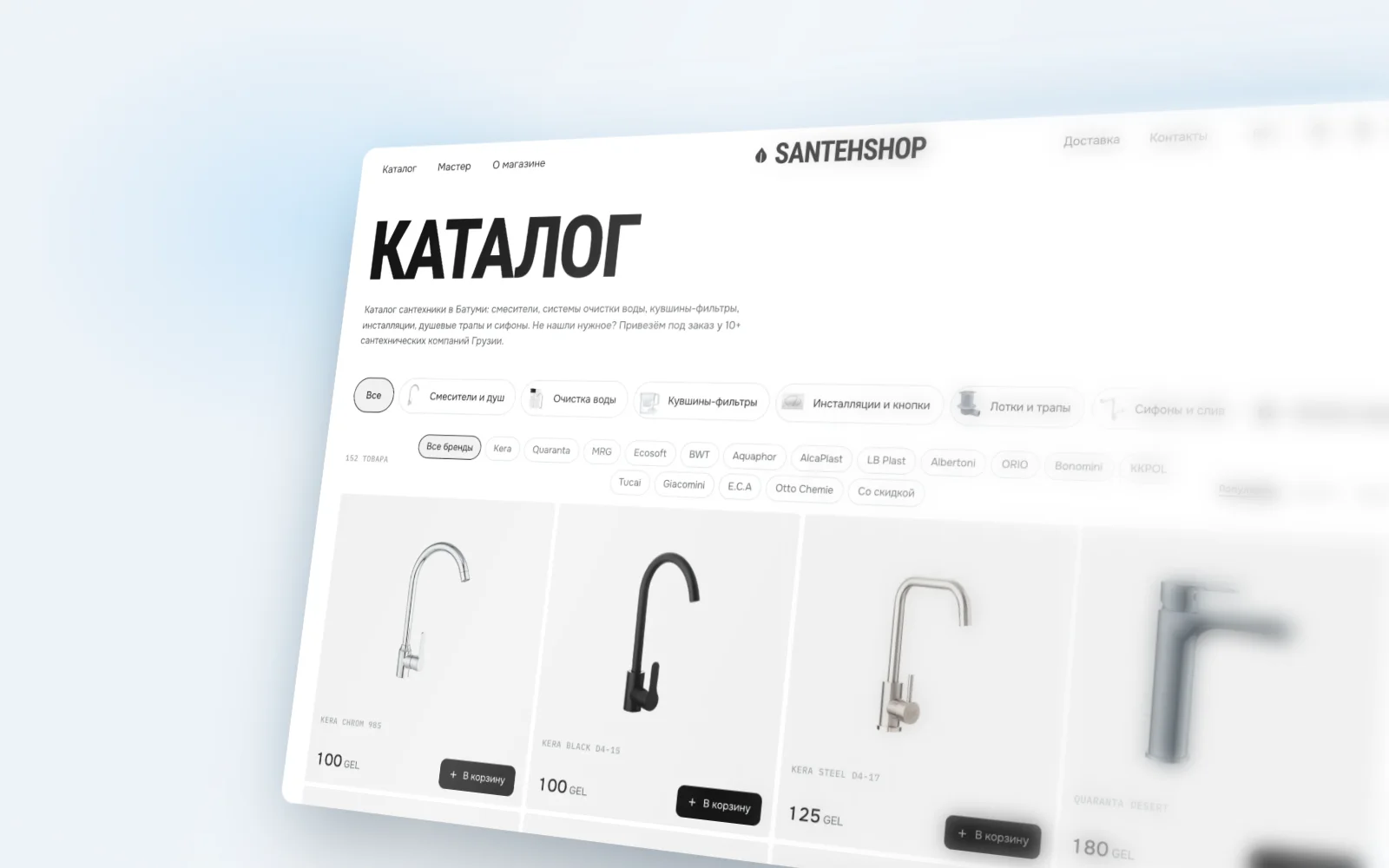
The catalog is the core of the store. If a customer cannot find a product in a couple of taps, they leave, even if you have it.
What matters:
- Clear categories. Group products the way customers think about them, not the way they sit in the warehouse.
- Meaningful filters. For plumbing that is category, brand and price; for clothing, size and colour. No more filters than the choice needs.
- Sorting by price, popularity and newness.
- Price and stock in the list, so nobody has to open every product to check.
- Mobile first. Most shoppers browse on their phones, so filters open as a separate panel and product tiles read without zooming.
Product page
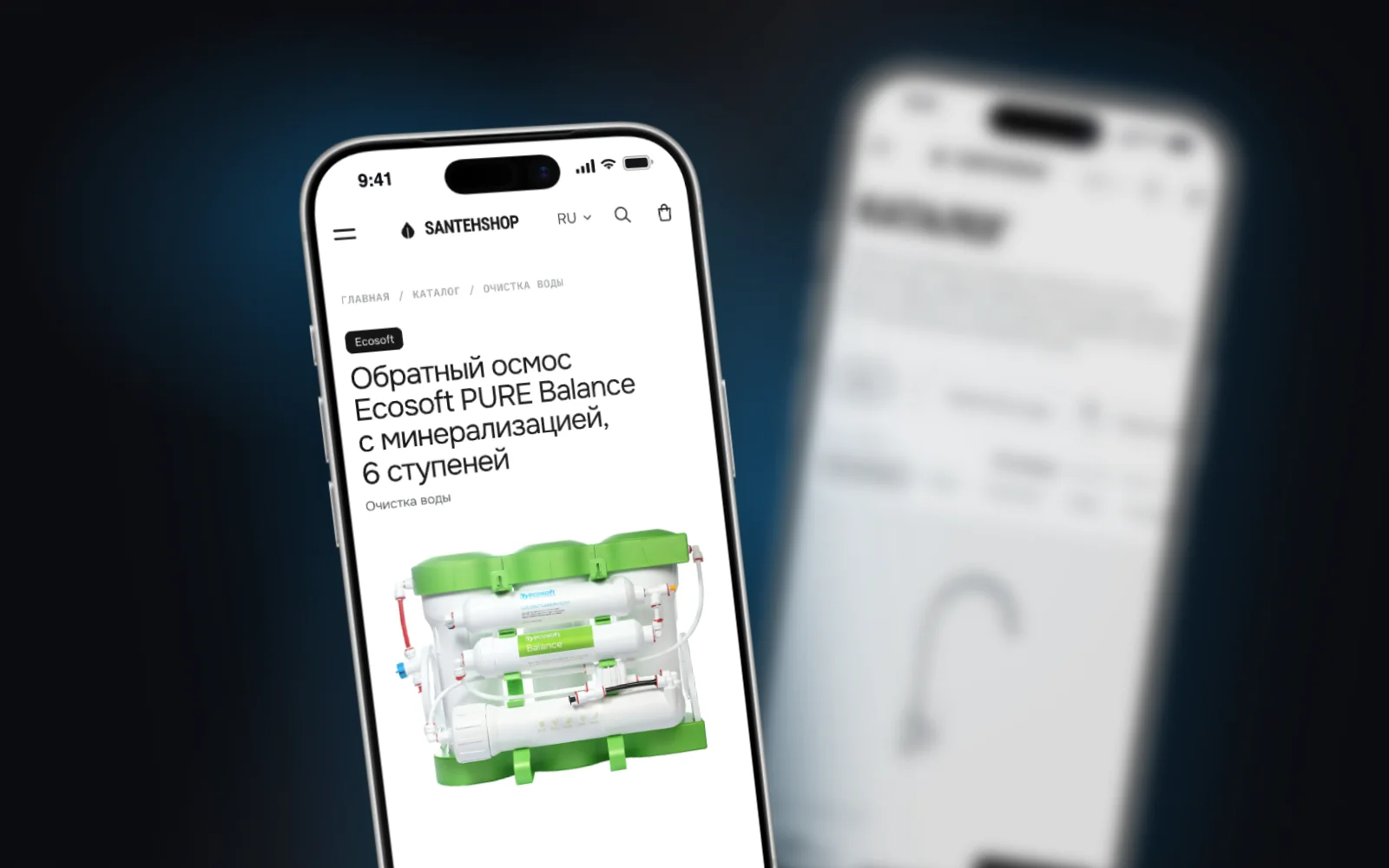
A product page answers the questions a customer would otherwise ask in a chat:
- several photos you can swipe and zoom;
- price in lari and availability;
- specs: size, material, brand;
- a short description of who the product is for;
- delivery terms right on the page;
- an "Add to cart" button visible without scrolling.
Search
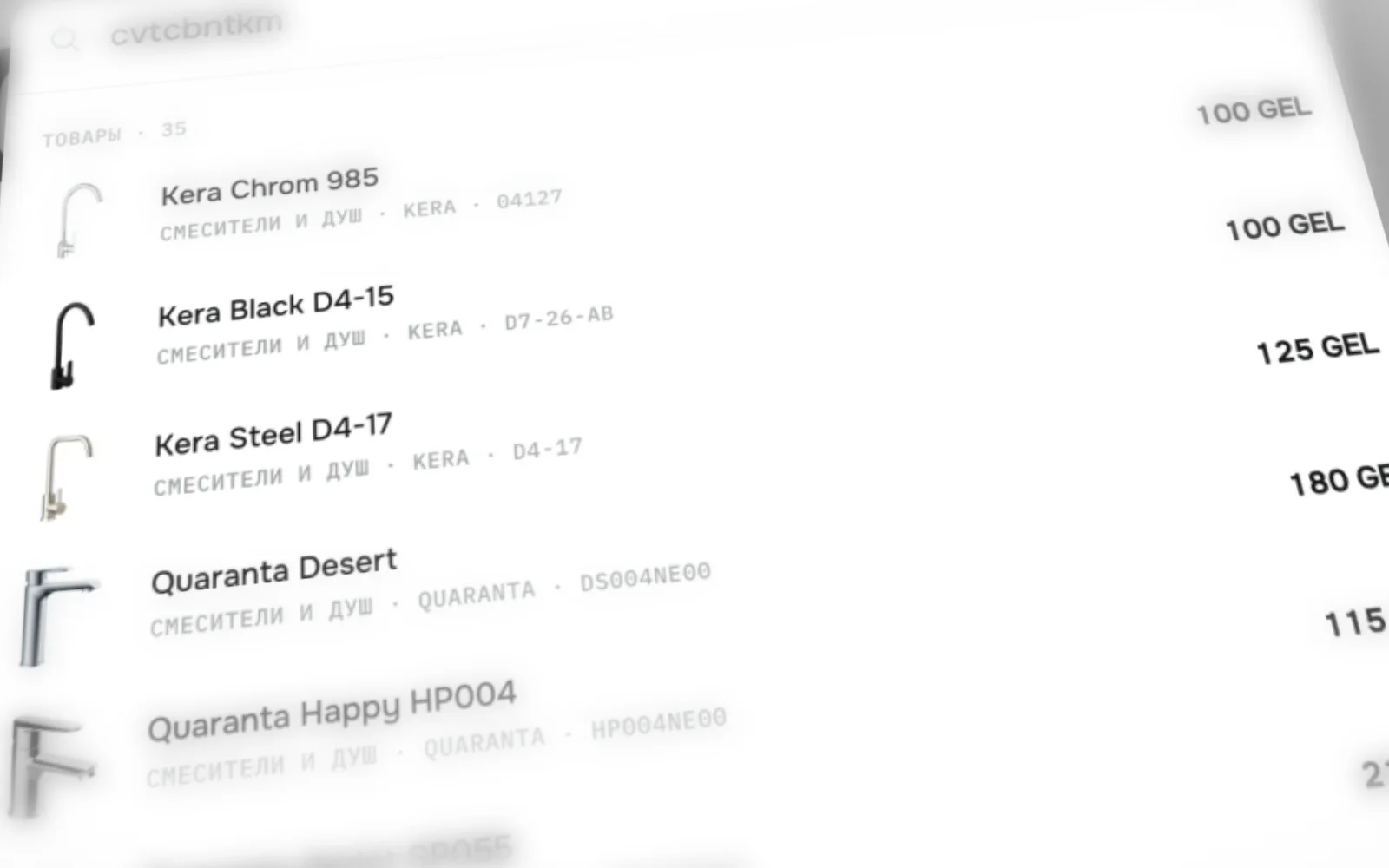
Once you have more than a few dozen products, you need search. Good search suggests products from the first letters, understands brand names and copes with small typos. In Georgia people often switch between two or three keyboard layouts, and Santehshop search still finds products when a word is typed in the wrong one.
Cart and checkout
This is where stores lose the most customers. The shorter the checkout, the more orders get finished.
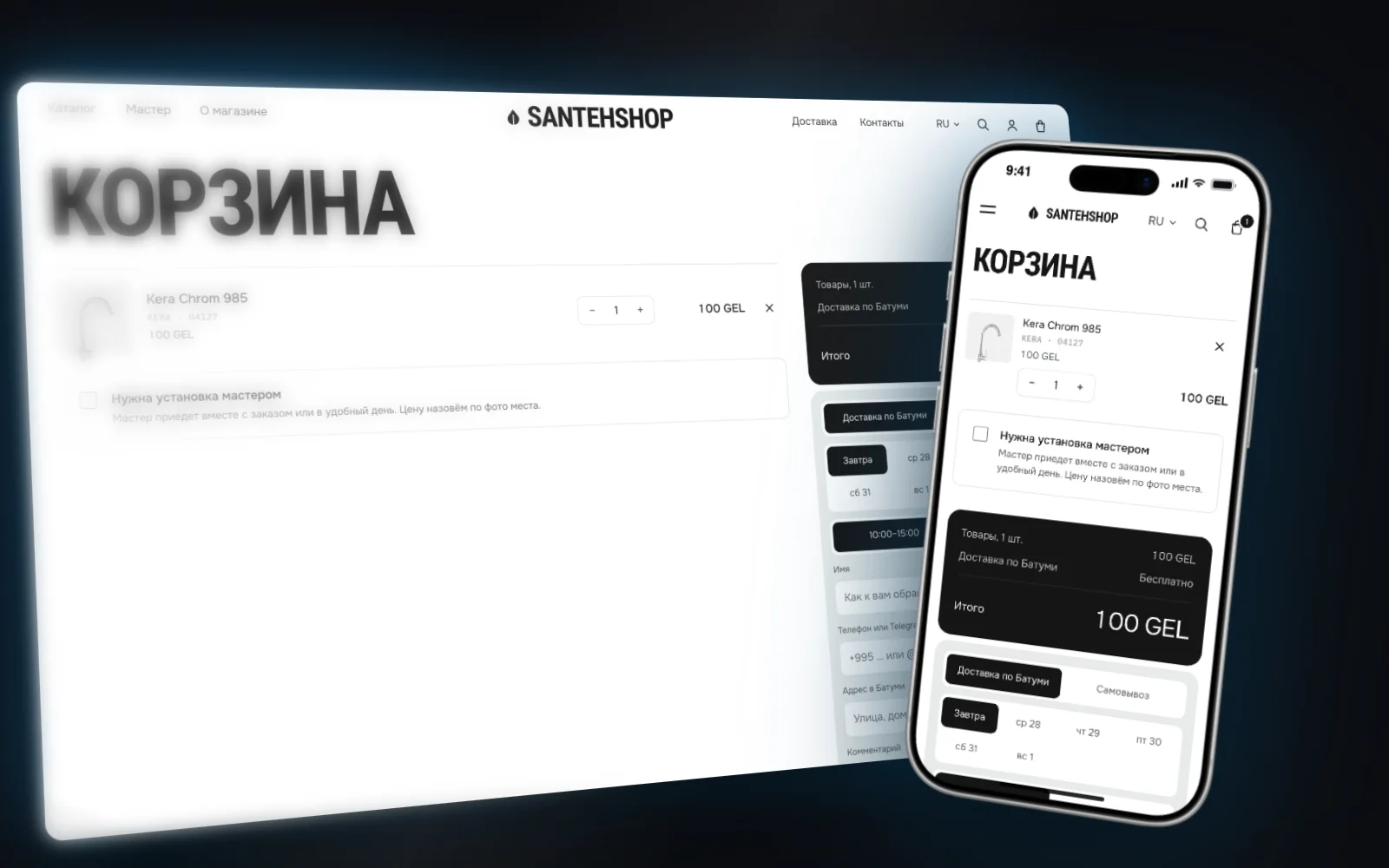
What we build into the cart:
- Few fields. Name, phone, address. No forced registration.
- Delivery day selection. The customer picks a convenient day. No more "when will you deliver?" calls, and you can plan routes.
- No surprises. Product total, delivery and the final amount are shown before confirming.
- Payment method. Card on the site, on delivery, or by invoice for companies if you sell to them.
- Confirmation. The customer sees an order number and what happens next.
Delivery in the city and across Georgia
Plan delivery before development, because the cart, prices and admin depend on it.
- In the city. If you deliver yourself in Batumi or Tbilisi, use zones or one flat price plus a free delivery threshold. Picking a day in the cart lets you group orders by day.
- Across Georgia. For other cities, stores usually work with courier services. On the site this is a separate option with its own price and time frame. Keep time frames realistic and confirm them with your courier.
- Pickup. If you have a shop or warehouse, show pickup as its own option.
The main rule: delivery terms should be visible before the cart, on a "Payment and delivery" page, on product pages and in the cart itself.
Online payments for an ecommerce website in Georgia
Card payment on the site reduces drop-offs: once the customer has paid, the order feels done. In Georgia, online payments are usually connected through a bank or a payment provider that gives you a payment form for the site.
What to consider:
- The contract. Fees and payout times differ, so check them with your bank.
- Currency. Prices in lari; if you sell to foreigners, you may need to accept cards from other countries.
- Cash or card on delivery. Some customers prefer to pay on delivery, so keep this option next to online payment.
- Payment status in the admin, so managers see which orders are paid.
For the details, read our article on online payments for a website in Georgia.
Admin panel: orders, customers, analytics
A store lives in its admin panel, not on the storefront. That is where your manager spends the day, so its convenience matters more than it seems at the start.
What an online store admin panel needs:
- Orders with total, delivery day and payment method. A new order arrives as a notification.
- Statuses, for example new, confirmed, out for delivery, handed over, cancelled. Nothing gets lost.
- Customers with order history, phone and address. Regulars stand out.
- Products and categories. Prices, photos, descriptions and stock change without a developer.
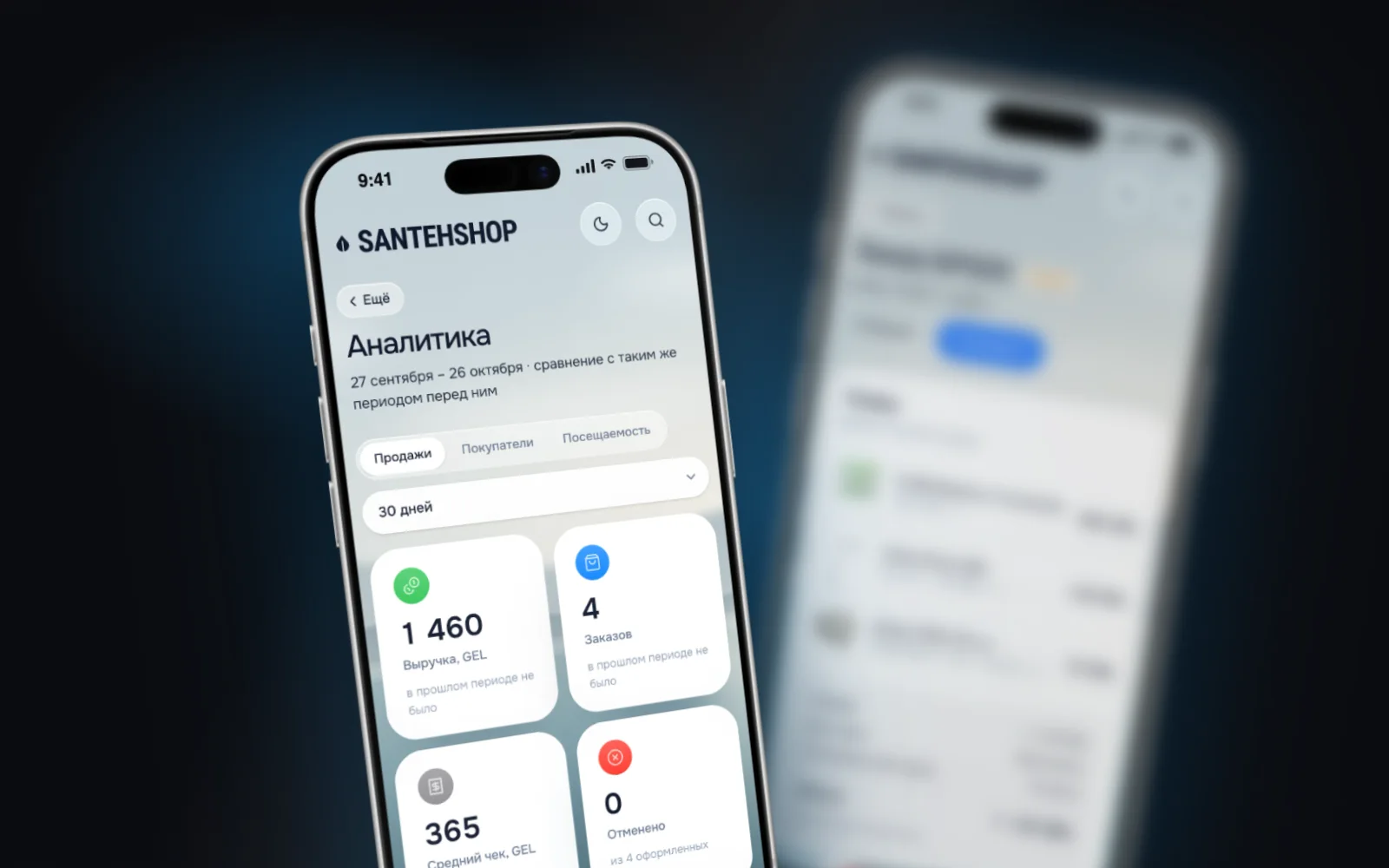
- Analytics: sales by day, average order, top products, traffic.
- Staff roles, so each person sees only what they need.
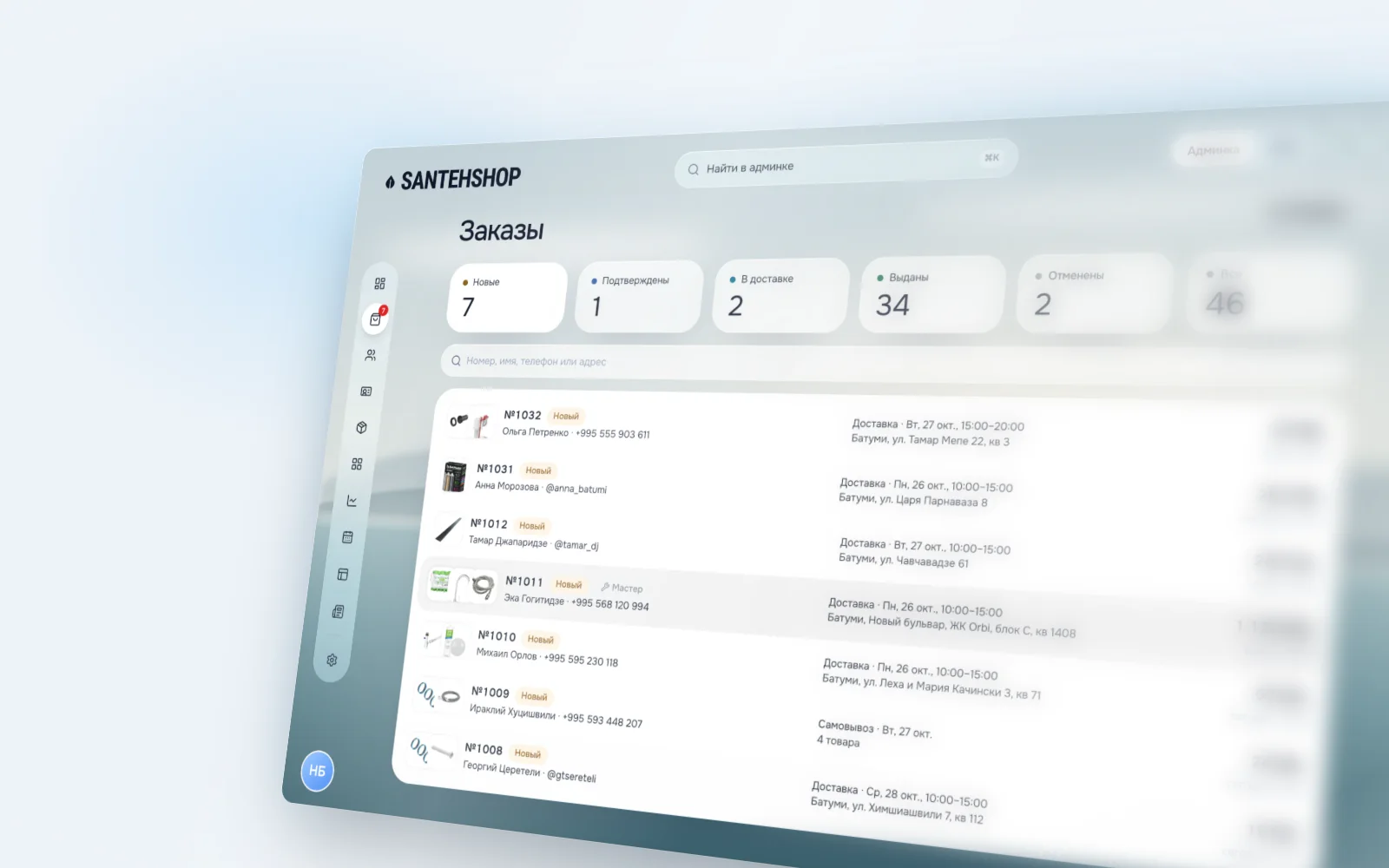
Our custom admin panel belongs to the store owner. There is no monthly fee for a CRM or a website builder, only the domain and hosting. It opens on a phone like an app, so a new order can be confirmed away from the computer.
Store SEO: category and brand pages
An online store gets most of its search traffic from category, brand and product pages, not the homepage. People do not search "plumbing store", they search "wall-hung toilet Batumi" or "Grohe faucet Tbilisi".
What we plan from day one:
- A separate page for each category with its own URL, title and a short text. A filter that only hides products on one page is invisible to search engines.
- Brand pages, if customers search by brand.
- Readable URLs like /catalog/faucets/ instead of /catalog?id=14.
- Original descriptions at least for key products, not only text copied from the supplier.
- Product markup with price and availability, so results can show rich snippets.
- Speed. A catalog with hundreds of photos has to load fast on mobile data.
- Languages. If you sell to locals and foreigners, the store needs several language versions. See our guide to a multilingual website in Georgia.
For promotion after launch, read our article on SEO in Georgia.
Case study: Santehshop online store in Batumi
Santehshop is a plumbing online store in Batumi that we built end to end, from design and catalog to its own admin panel. You can try it live in the Santehshop demo.
What it includes:
- A catalog of 152 products with filters by category and brand.
- Product pages with a photo gallery, price, specs and a cart button.
- Search with suggestions as you type.
- A cart with delivery day selection: customers choose the day, and the store sees the load for each day in advance. Pickup works with a chosen day too, and customers can tick a box if they need a plumber to install the product.
- Its own admin panel: orders with statuses, customers with order history, products and categories, sales and traffic analytics.
Next to the store runs the website of a plumbing service, San Teh Batumi: call-out requests, plumbers and their schedules live in the same admin panel. For the business, product sales and installation are managed from one place.
How we build an online store
- Request. You tell us what you sell, how many products you have and how you take orders today.
- Call or chat. We clarify delivery, payments, languages and who will work in the admin.
- Market and competitors. We look at how customers search for your products and build the catalog structure.
- Design, copy, development and SEO. We name the timeline up front; a store is bigger than a regular site, so it usually takes longer than a week.
- Launch on your domain. We show you how to add products and handle orders, and we stay in touch.
What drives the price of a store is covered in our article on website cost in Georgia. See all our services.
How much does an online store cost in Georgia
According to agency directories, an online store in Tbilisi or Batumi usually costs $3,000–10,000. With us it is noticeably cheaper: we price by the actual scope of work, and our store and admin core is already built.
A small turnkey online store starts from $400 with us. That includes a catalog with filters, a cart with a choice of delivery day, an admin panel with order and status management, and customer accounts.
The full price depends on the project and add-on features:
- online card payments through a bank;
- an extra site language;
- moving or filling the catalog if you have many products;
- special delivery rules and integrations.
We give the exact price after a short conversation and itemise the quote. For market prices, see how much a website costs in Georgia.
FAQ
How many products do I need for my own store to make sense?
There is no exact number. A good signal: customers stop finding products in your social feed and keep asking the same questions in chats.
Can products be imported from a spreadsheet?
Yes. If you have a spreadsheet with names, prices and specs, we move the products into the store in one go. Photos and descriptions can then be added in the admin.
Do customers need to register?
No. We keep guest checkout, because forced registration scares some buyers away. An account helps regulars: on Santehshop a customer can sign in and see their orders.
Who will change prices and add products?
You or your manager, in the admin panel, without a developer, including from a phone.
Do I pay a monthly fee for the admin panel?
No. The store and the admin belong to you. You pay for the domain and hosting, plus bank fees for online payments if you connect them.
Let's talk about your online store
Tell us what you sell, how many products you have and how you deliver today. We will suggest a catalog structure, delivery and payment options, and name the timeline up front. We reply within one business day on Telegram, WhatsApp or through the form below.